Overcoming compliance barriers (ESMA ECAS certification & UN38.3 battery standards), optimizing costs (EV tariff exemptions & Dubai logistics), and mitigating market risks (desert adaptation & localization) are critical for importing Chinese vehicles to the UAE. This 2026 guide integrates the latest UAE import policies, Google trending insights, and practical cases to provide a turnkey solution for Chinese EV import to UAE and conventional vehicle imports.

Partner with China auto suppliers experienced in UAE exports and pre-certified for ESMA ECAS compliance (e.g., IHKA Auto with 40+ Chinese brands), a key factor for China to UAE car import success. Prioritize models pre-equipped with CCS2 charging ports (essential for UAE’s 50°C desert climates) and GSO 42/2015 safety compliance, aligning with 2026 UAE car import regulations.
On-Site Inspection Tips (2026 Trending Focus):
· Request high-temperature battery performance reports (critical for EVs in UAE’s heat, a top search for Chinese EV import to UAE).
· Verify Arabic language dashboard compatibility (mandatory for local registration, per 2026 UAE customs rules).
· Document vehicle details with photos to prevent shipping damage disputes (a common pain point for car import from China to Dubai).
Importing vehicles from China to the UAE requires compliance with both Chinese export rules and 2026 UAE import requirements—non-compliance is the top reason for clearance delays, per Google Trends for UAE vehicle import.
China Export Requirements:
· China Compulsory Certification (CCC) for all vehicles.
· Vehicle inspection reports (condition, specs, safety).
· GB 38031-2020 battery safety documents (mandatory for EVs, linked to UN38.3 certification).
UAE Import Requirements (2026 Updated):
· RTA Import Permit (3-day online approval, a time-saving tip for Dubai car import).
· Arabic commercial invoice (embassy-notarized, with 12-digit HS code per 2026 UAE customs regulations).
· Transport insurance covering battery thermal runaway (essential for EV imports).
Pro Tip: Use Dubai Trade Blockchain to cut customs clearance to 48hrs—one of the most searched hacks for UAE customs clearance for cars in 2026. Dubai Trade remains the official platform for customs-related registrations and services in 2026, per UAE customs guidelines.

Transportation costs directly impact retail profitability, making logistics a top priority for China to UAE auto import businesses. Budget constraints, delivery timelines, and cargo specifications are the three key decision factors.
Port Recommendations (Top Trending Choices):
· China: Qingdao/Shanghai/Tianjin (dedicated auto terminals, reducing loading delays).
· UAE: Jebel Ali Port (handles 90% of UAE auto imports, the preferred hub for car import to UAE).
Cost-Saving Hack: Use DMCC Dubai for LCL Consolidation to save 28% on 40ft shipments—highly searched by small-to-medium importers for China to UAE car shipping.
When selecting a freight forwarder, evaluate qualifications, rates, and service capabilities. For in-depth insights, explore our blog: How to Choose a Freight Forwarder for Car Imports from China (a complementary resource for UAE auto import logistics).
This section aligns with 2026 Dubai Customs regulations and real-world cases, addressing the most searched questions aboutUAE car customs clearance. Dubai Customs continues to enforce the GCC Common Customs Law in 2026, with all imports requiring detailed declarations and supporting documents.
Pre-Arrival Documents (7 Days Before Docking):
· CIF-value commercial invoice (30% penalty for under-declaration—critical for avoiding extra costs; accurate invoicing remains a key requirement under 2026 customs rules).
· China export certificate (CCPIT-notarized + Arabic translation, with 6-digit base HS code).
· ESMA CoC with GSO 42/2015 + UN38.3 battery certification (mandatory for EVs, updated 2026 ESMA ECAS requirement).
· Left-hand drive declaration (right-hand drive vehicles are strictly prohibited in the UAE).
· Bill of Lading labeled “Battery Secured” (EVs) or “Vehicle on Own Wheels” (incorrect labeling risks rejection; B/L remains a mandatory document for customs clearance in 2026).
· CCIC pre-shipment inspection report (QR-coded VIN verification, continued requirement in 2026).

Customs Clearance Post-Arrival:
· Day 1: Submit Mirsal 2 e-declaration (accurate CIF value calculation is mandatory; e-declarations remain the standard for 2026 customs processing).
· Day 3: Pay 5% duty + 5% VAT (EVs exempt from VAT and 0% customs duty until Dec 2026).
· Day 5: Collect vehicle under blue temporary plates for mandatory modifications.
Fee Breakdown Example (BYD Seal EV valued at AED 100,000):
· Customs Duty: 0 AED (EV tariff exemption, 2026 UAE green policy).
· Testing Fee: 450 AED (RTA-approved lab).
· Plate Issuance Fee: 550 AED.
Total Savings: VAT exemption of 5,250 AED + 5,000 AED customs duty exemption (key incentive for Chinese EV import to UAE).
Localization is critical for RTA registration—mistakes here cause costly delays, a top concern for UAE car import importers.
Mandatory Modifications:
· Arabic dashboard/metric speedometer (mandatory for local compliance).
· Window tint removal (≥70% light transmission required, enforced for desert visibility).
EV Charging Certification:
· Home chargers: Villa electrical capacity proof.
· Showroom chargers: Sign Dubai Charge access agreement.
RTA Registration: Submit modification proof to Vehicle Inspection Center for white plates (3 working days—fast-tracking this step is a common search for Dubai car registration after import).
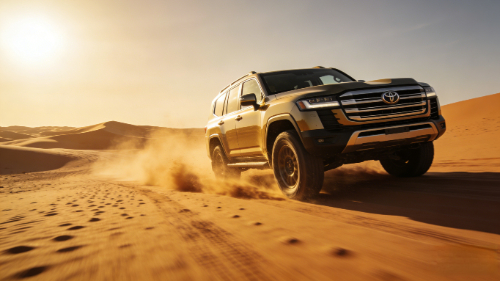
Based on 2026 UAE automotive market sales data, IHKA Auto’s inventory, and Google Trends for Chinese cars in UAE, we’ve compiled optimized recommendations integrating policy compliance, profit margins, and local preferences. Top trending models include BYD Seal (EV), GAC Aion Y (family-friendly EV), Geely Coolray (fuel-efficient SUV), and Chery Tiggo 8 Pro (desert-adapted crossover)—all pre-compliant with ESMA ECAS and GSO 42/2015 standards, ideal for China to UAE car import profitability.
Steering Wheel & Vehicle Age: UAE only permits left-hand drive (LHD) vehicles; right-hand drive (RHD) requires port modification (≥AED 12,000) or re-export. Used vehicles over 4 years old are prohibited (EVs: 5-year limit), with customs systems automatically intercepting non-compliant shipments—consistent with 2026 import regulations. Note that vehicle age restrictions vary by country; for example, Kenya enforces an 8-year limit for used car imports, but this does not apply to the UAE.
Localization Adaptation (Desert & Policy Alignment):
· EVs: Batteries must pass UN38.3 thermal runaway tests; pre-install CCS2 fast-charging ports (compatible with local European-standard chargers).
· Fuel Vehicles: Engine cooling systems with 65°C thermal certification (mandatory for desert operation); window VLT ≥70% (on-site replacement if non-compliant).
Quotas: Individuals can import 1 vehicle/year (new/used); companies need an import code linked to a CR Commercial License. The same consignee can import 1 vehicle every 2 years (stricter for used vehicles—verify customs records first). For imports from UAE free zones to local markets, companies must pay applicable tariffs and use registered importers or authorized customs brokers, per 2026 Dubai Customs rules.
B/L Labeling: EVs unmarked “Battery Secured” risk rejection; hybrids must specify “Hybrid Fuel Type” on B/L (otherwise taxed 5% VAT as fuel vehicles, losing new energy exemptions). All vehicles must have “Made in China” origin label and 12-digit HS code (2026 UAE regulations). In 2026, Dubai Customs also requires accurate origin documentation for all imports to enforce tariff rules effectively.
This end-to-end framework simplifies importing vehicles from China to the UAE in 2026, addressing compliance, cost optimization, and risk mitigation—key priorities for importers searching for UAE car import guide 2026. Whether you’re a dealer, service provider, or individual, partnering with pre-certified suppliers and mastering 2026 regulations is paramount. Dubai Customs continues to streamline clearance processes via digital platforms like Dubai Trade, but strict adherence to documentation requirements remains essential for smooth imports.
Yijie Auto leverages robust China-UAE supply chains and 2026 market intelligence to deliver comprehensive automotive export solutions. Contact our experts today for competitive quotes and tailored support forChinese EV import to UAE and conventional vehicle imports.
Tianjin Yijie Automobile Sales Co., Ltd. was established in 2011,and is located in Tianjin, enjoying convenient transportation and beautiful environment. Our company covers an area of 2000 square meters and has150 employees. We are specialized in the whole vehicle business. Our company has rich experience in the automobile industry...[ Read More >>]


